03 March, 2008
24 February, 2008
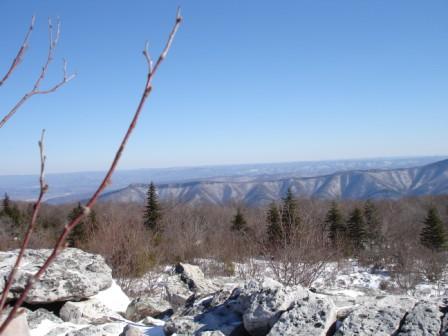
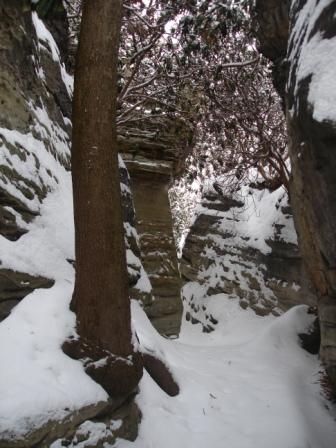
Dolly Sods Winter(less) Trip
 I spent about 5 hours traveling back and forth from Pittsburgh to Friendsville, MD yesterday to solve a problem. I didn't realize that this was the reason, but in spending that time with my friend, Jason, articulating precisely how each of us feels about the activities that we share led us both to the same conclusion. We like to create and then solve problems.
And so, wearing this all-encompassing cloak, the activities that occupy both my professional and personal time fall into a comfortable category.
Last week I hosted a group of friends on a problem solving expedition to a cabin at Dolly Sods.In planning the trip, the problem to be solved had several constraints. The road to the cabin is impassible when covered in snow. The cabin has no electricity or plumbing and the cabin is heated by a woodburning stove. Food must be packed in. And, most importantly, it must be fun to endure all of these constraints. For months I badgered friends with tales of deep snow, high winds, and bitter temperatures. Email after email encouraged hearty participants to pack "layers, layers, layers" to stay warm and snowshoes or skis for efficient travel on the impassible forest road. I had loaded the cabin with three carloads of firewood in anticipation of the trip. Set aside weekends in February, I encouraged them; the snow will be there.
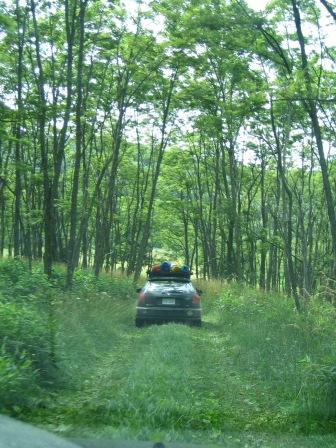
As it happens, the most limiting of that list would be voided by Mother Nature because there was no snow on the road and so we drove right up to the front door and unloaded our gear. In a trickle-down effect, other problems were subsequently voided and so we might as well drive in a few cases of beer, right?
 With the initial problem solved, the group of 8 of us then began creating more problems to solve. The gas grill in the cabin ran out of propane and so we cooked on the woodburner. The trail we wanted to hike would end on a forest road, miles from both the car and cabin. We chose to hike it nonetheless, hoping the drivers could successfully hitch-hike back to the cars (they did). I don't doubt that the course of the weekend was dictated by the group's initial quest to come out of the trip feeling a sense of accomplishment.
I like to organize another annual trip that involves summiting a 3800 foot steep and rocky mountain in Shenandoah National Park at nighttime. Held in the late fall when there are no leaves on the trees to block the moon's full brightness, we solve problem after
 problem and then celebrate back at our rented cabin.
To get to the cabin at Dolly Sods, we drove up Forest Road 19 from the Eastern side of the plateau prepared to stop at the first steep section of road that was iced over. Encountering no such sections, we continued to the cabin and began a hot fire in the woodburner and began to discuss where we'd hike. The Red Creek trail won us over and the rest of the day was spent in the woods navigating our way on the approximately 7 mile hike along pristine Red Creek to the Rorbaugh Plains rock outcroppings. In doing so, we forded countless small brooks, some which were sheets of fragile ice, each one a small, independent problem to solve. We even spent about an hour solving the very difficult problem of crossing Red Creek, where the powerful water was ice cold and most exposed rocks were coated with a sheet of ice. Once that problem was solved by a few members of the group, we all decided that the existence of a solution was satisfying enough and we proceeded up the creek without crossing.
Back at the cabin, Saturday night became legendary as everybody disclosed the foods that they'd brought for the group. Because no coolers were needed, the group had packed in a feast. Grease Fire even showed up, driving his RC car all the way up to mountain and across the meadow. But, we had fireproof gloves with us and so nobody got burned. Even the dogs will never forget that evening at the cabin.

 On Sunday we hiked the most popular trail in the region to the summit of Seneca Rocks and saw only two other people there. The benefits of winter adventuring reveal themselves over and over. Because there was no paparazzi, we were able to shoot an episode of the Michael Burke Show, which continued at the Purple Fiddle in Thomas.
Check out more photos here and here and here and here.
Git r' Dun.


31 January, 2008
Bloodline
At the request of somebody very dear to me, I am publicly admitting that after a year and a half, I now have WV running through my veins. In case anybody reading this is not convinced, here is some support of this admission:
While hiking recently, my friend Andrew commented that nobody his age (early-mid-20's) does anything like this (this being a very soggy hike down Big Sandy Creek after a big rain) and it got me thinking that either Andrew is somehow avoiding the people in WV who actually get out, or he is right.
Git 'r Dun.
- I drive the state's other official vehicle (not a pickup). It's a Subaru and it's very dirty. Always.
- My bookmark is a twig.
- The beard, which stores my bookmark while reading.
- Local parlance such as the following sometimes finds its way into my vocabulary: reckon (v.), holler (n.), yeller (adj.), and git 'r dun (v.).
- I just bought a dehydrator so that I can make my own jerky.
- I frequently describe things as being wild or wonderful.
- One of my current projects is a quilt.
While hiking recently, my friend Andrew commented that nobody his age (early-mid-20's) does anything like this (this being a very soggy hike down Big Sandy Creek after a big rain) and it got me thinking that either Andrew is somehow avoiding the people in WV who actually get out, or he is right.
Git 'r Dun.
02 January, 2008
Close Call on the Sandy
"GET ME A ROPE UP THERE!"
When it became clear that a swift and effective rescue was necessary, veteran Big Sandy Boater Max Harbert took the reigns of the rescue of his friend, Joe (name changed for protective measures), who had found himself in a potentially deadly bind at the notorious Splat rapid, a sequence of two difficult drops. The first drop cascades while losing about 8-feet of elevation as it crescendos through sticky and complicated holes and had reeled Joe into its G-spot. Squirting his boat into a short vertical dance, Joe landed upside down in the rapid's fast current headed for the second drop of Splat, a 15-foot waterfall that lands on a trailer-sized boulder. Separated by about 30 feet (seen in the photo to the right), the duo presents paddlers brave enough to attempt a run with little margin for error. Descending the waterfall safely requires a swift and strong trajectory to the left. Boaters swimming the bottom drop or running it in any other fashion are generally likely to be subjected to consequences ranging from serious injury to drowning.
Big Sandy Creek was running at an enjoyable level of 5.85 feet on the Rockville gauge for the final Saturday of 2007. When my kayaking partner for the day, Jason, and I got to the put in and began to suit up, I expressed surprise at the fact that there were no other cars parked there, giving us the false promise of a quiet and unobstructed run down my favorite local river. The fallacy of it was exposed within a few minutes when a caravan of six more vehicles arrived. Safety comes in numbers, so part of me was relieved and ultimately, the cliche proved itself true on this day.
The mile or so to the first waterfall, Wonderfalls, is an exciting warm up for the big rapids below and a good time for the paddlers in a group to become acquainted with each other. In this case, there were several first-time Sandy paddlers in two groups making up about 15 boaters. The first timers had all successfully run much more dangerous rivers like the Green (NC) and Blackwater, so we all proceeded with no concern and ran the approach and Wonderfalls. Waiting at the bottom of the 18-foot drop, the group saw no issues whatsoever and so we all peeled out into the current and moved on.
It was only a week ago at Wonderfalls where I had witnessed both the most fearful and astonishing moments of my whitewater experiences. After beaching himself onto the ledge at the top of a swollen Wonderfalls, a member of the group in which I was paddling spun sideways to a position parallel with the ledge, and toppled over, landing on his side. To our concern, he disappeared completely for an exceedingly uncomfortable period of time and we saw no equipment, boat or swimmer emerge from the violent hole at the bottom of the falls. After a minute or two, we astonishingly discovered that he'd executed a roll only to find himself behind the waterfall in the large space under the overhanging rocks.
A paddler swam at Little Splat. I was told that he hadn't met his annual quota, so there was little anything could do about it. There's no sense in fighting the River Gods.
The near tragedy then occurred at Splat, and the intensity of the rescue that ensued in the relatively small distance between Splat's two drops was bone-chilling. When the day's first Splat runner, Jason Hilton, indicated his intentions, I proceeded to the best rope-throwing position at the foot of the first drop. From this position, a rope can reach across the river far enough above the big waterfall to pull a swimmer to an eddy before an unthinkable swim onto Splat rock can occur. Jason, who runs Splat regularly, paddled through both drops without incident, perhaps giving Joe a poor impression of the precision required in running the rapid.
And so, equipped with the best wishes of all of the members of both group, Joe proceeded. His run was ugly from the beginning. With a near-flip at the top of the first drop, Joe was moving sideways while bracing hard on his right side as he entered the mayhem of the hole at the bottom of the cascade. Within a few seconds, he was attempting his roll while being pushed against the cliff on the right side of the river, where the current is at its strongest. But, his attempts failed as he scraped his paddle against the rocks over and over. Finally coming to rest underneath an overhanging section of the rocks, he quickly exited his capsized boat and found himself in a grotto behind a small waterfall. We were all relieved to see him give the "a-ok" sign by tapping his head with his hand. Joe even was hanging onto his paddle and boat!
Because I was on the left side of the river and Joe was inside a narrow space, I was unable to do more than to be ready to throw a rope to him if he came out into the current. I started walking back to where the group was all standing, but was quickly and smartly sent back to my position by Max. Several paddlers jumped into their boats, splashed into the water below the waterfall, and paddled across to the other side. Jumping to their feet with ropes in hand, they then quickly scaled the cliff and moved their way to a point directly above Joe.
The rescue from there went smoothly. Ropes and hands were offered to Joe, which he gratefully accepted and he, along with his boat and paddle, was raised to safety. Joe and Max hugged each other there on the rocks, and a small celebration erupted among the rest of us. I have been witness to such celebrations before, and it is difficult to adequately describe the feeling associated with seeing a life saved by the actions of others. It was a great way to end an unforgettable year of paddling.
More photos can be found here.
Git r' dun.
When it became clear that a swift and effective rescue was necessary, veteran Big Sandy Boater Max Harbert took the reigns of the rescue of his friend, Joe (name changed for protective measures), who had found himself in a potentially deadly bind at the notorious Splat rapid, a sequence of two difficult drops. The first drop cascades while losing about 8-feet of elevation as it crescendos through sticky and complicated holes and had reeled Joe into its G-spot. Squirting his boat into a short vertical dance, Joe landed upside down in the rapid's fast current headed for the second drop of Splat, a 15-foot waterfall that lands on a
 trailer-sized boulder. Separated by about 30 feet (seen in the photo to the right), the duo presents paddlers brave enough to attempt a run with little margin for error. Descending the waterfall safely requires a swift and strong trajectory to the left. Boaters swimming the bottom drop or running it in any other fashion are generally likely to be subjected to consequences ranging from serious injury to drowning.
Big Sandy Creek was running at an enjoyable level of 5.85 feet on the Rockville gauge for the final Saturday of 2007. When my kayaking partner for the day, Jason, and I got to the put in and began to suit up, I expressed surprise at the fact that there were no other cars parked there, giving us the false promise of a quiet and unobstructed run down my favorite local river. The fallacy of it was exposed within a few minutes when a caravan of six more vehicles arrived. Safety comes in numbers, so part of me was relieved and ultimately, the cliche proved itself true on this day.
The mile or so to the first waterfall, Wonderfalls, is an exciting warm up for the big rapids below and a good time for the paddlers in a group to become acquainted with each other. In this case, there were several first-time Sandy paddlers in two groups making up about 15 boaters. The first timers had all successfully run much more dangerous rivers like the Green (NC) and Blackwater, so we all proceeded with no concern and ran the approach and Wonderfalls. Waiting at the bottom of the 18-foot drop, the group saw no issues whatsoever and so we all peeled out into the current and moved on.
It was only a week ago at Wonderfalls where I had witnessed both the most fearful and astonishing moments of my
 whitewater experiences. After beaching himself onto the ledge at the top of a swollen Wonderfalls, a member of the group in which I was paddling spun sideways to a position parallel with the ledge, and toppled over, landing on his side. To our concern, he disappeared completely for an exceedingly uncomfortable period of time and we saw no equipment, boat or swimmer emerge from the violent hole at the bottom of the falls. After a minute or two, we astonishingly discovered that he'd executed a roll only to find himself behind the waterfall in the large space under the overhanging rocks.
A paddler swam at Little Splat. I was told that he hadn't met his annual quota, so there was little anything could do about it. There's no sense in fighting the River Gods.

The near tragedy then occurred at Splat, and the intensity of the rescue that ensued in the relatively small distance between Splat's two drops was bone-chilling. When the day's first Splat runner, Jason Hilton, indicated his intentions, I proceeded to the best rope-throwing position at the foot of the first drop. From this position, a rope can reach across the river far enough above the big waterfall to pull a swimmer to an eddy before an unthinkable swim onto Splat rock can occur. Jason, who runs Splat regularly, paddled through both drops without incident, perhaps giving Joe a poor impression of the precision required in running the rapid.
And so, equipped with the best wishes of all of the members of both group, Joe proceeded. His run was ugly from the beginning. With a near-flip at the top of the first drop, Joe was moving sideways while bracing hard on his right side as he entered the mayhem of the hole at the bottom of the cascade. Within a few seconds, he was attempting his roll while being pushed against the cliff on the right side of the river, where the current is at its strongest. But, his
 attempts failed as he scraped his paddle against the rocks over and over. Finally coming to rest underneath an overhanging section of the rocks, he quickly exited his capsized boat and found himself in a grotto behind a small waterfall. We were all relieved to see him give the "a-ok" sign by tapping his head with his hand. Joe even was hanging onto his paddle and boat!
Because I was on the left side of the river and Joe was inside a narrow space, I was unable to do more than to be ready to throw a rope to him if he came out into the current. I started walking back to where the group was all standing, but was quickly and smartly sent back to my position by Max. Several paddlers jumped into their boats, splashed into the water below the waterfall, and paddled across to the other side. Jumping to their feet with ropes in hand, they then quickly scaled the cliff and moved their way to a point directly above Joe.
The rescue from there went smoothly. Ropes and hands were offered to Joe, which he gratefully accepted and he, along with his boat and paddle, was raised to safety. Joe and Max hugged
 each other there on the rocks, and a small celebration erupted among the rest of us. I have been witness to such celebrations before, and it is difficult to adequately describe the feeling associated with seeing a life saved by the actions of others. It was a great way to end an unforgettable year of paddling.
More photos can be found here.
Git r' dun.
17 December, 2007
Adventures North of the Border

This weekend I spent the days on PA rivers. My trip report from Got Boof from a dramatic Sunday on Indian Creek is reprinted here:
The elation associated with seeing my friend Mike ashore, grinning and arms waving, was significant enough to allow me – for a moment – to forget about my physical discomforts. The soreness in my back from paddling as swiftly as possible for five miles and the numbness in my fingers, the stinging on my face, and the shivering in my core from doing so in sub-freezing temperatures into a strong headwind were overtaken by relief. Mike was literally and figuratively out of the woods and this meant that we would not be faced with the prospect of beginning a search for him there in these conditions.
We started the day with a plethora of prospects, but needed to be on the safe side. It had rained enough overnight to bring up some of the gauges and because Mike is a beginning paddler, the options were a bit more limited. After toying around with the idea of the Casselman River (too high), Laurel Hill Creek (probably our safest bet), and Indian Creek (just a bit of a challenge for Mike), we opted for the latter because it came with the addition of our friend Jason, who would add 33.3% more safety on the water. That seemed to make Laurel Hill Creek a less desirable option, and as we found out later, that was actually a 50% increase because our friend Art came along as well. Indian Creek it was. Grease Fire did his best Indian impression, though I'm not certain that any American Indian actually ever repeatedly hit his or her mouth with their hand while making a loud "O" sound.
Indian Creek at the level we found it yesterday is a lot like the Lower Yough with the addition of two 6-foot ledge drops that excited the experienced paddlers in the group (Art, Jason, "Grease Fire" Rob, and me) and challenged Mike to experiment with a boof stroke. His first experiment failed, and after a short sideways ride in a curtain, Mike swam out of his boat. Strike one. In general, few holes on Indian Creek were not punch-worthy, but Mike found one of these a short time after his first swim. Strike two. In fact, after swimming out of this hole, his boat found itself abandoned for the first time that day on a mid-river ledge. No fear; Indiana Jones brought his whip. Cue in the theme music.
With Mike's third swim came his third strike. All agreed it was time to walk. Because we were more than halfway down the Indian, he would walk downstream. When he reached the confluence with the Yough, we would all paddle the flatwater five miles to the take out. The wrench in the plan came about 30 minutes later when Jason and I realized that there are two un-crossable tributaries before that, Rasler and Richter Run. It was at that moment that I became unnerved with the situation, and so when we got to Rasler Run, I insisted on hiking up to find Mike. Also at that moment, Mother Nature chimed in with her interesting twist: a snowstorm.
And so I spent the next 90 minutes (wild guess here; no watches in the group) hiking up and down Rasler on both sides trying to locate Mike. Blowing my whistle and shouting was unsuccessful as I crawled on all fours against the cold ground through thick rhododendron. Grease Fire waited at the confluence and eventually huddled under a thick patch of rhododendron to stay warm. Art and Jason hiked up Rasler with their boats for about ¾ of a mile and paddled the class 5 creek back down. When we reunited at the small creek's end, we decided that the situation was now urgent enough to make our main priority getting to Mike. And, he had to be somewhere between Rasler and the put in, an area we were now unable to adequately search because we were downstream of it.
The beauty of shoving our kayaks back into Indian Creek with big, heavy flakes dropping was barely noticed as we all pushed on. As we approached AW-rated class 5 Terminator rapid, I bowed to the River Gods and asked for kindness. We scouted, and all ran the big Upper Gauley-esque wavetrain with no issues. In a rapid below that, Rob was surfed sideways into a big hole. As we all reacted by turning around to help, Jason was closest to him. Rob wrestled with the hydraulic for a 20-second ride, was flipped, and then surfed himself out the side of the ugly hole. Upon reaching Jason, he sternly said, "We don't have time for a swimmer." Cue up that theme music one more time.
The day was clearly getting late when we reach the mighty Yough. Looking more like the Ohio, the river was more than 100 yards wide and the wind was whipping whitecaps into showers of spray. A plan was initiated, though I think that it was probably slightly different in each of our heads. In mine, it was as follows. I would paddle hard with keys to one of the take out vehicles, warm it up and get changed into dry clothes. That would allow me to load boats onto the roofs while the others changed and warmed up. Once we were ready to move, one car would go straight to the put in vehicle, hoping to find Mike there. The other car, equipped with a Gazetteer, would take a detour and explore the back roads on the upstream side of Rasler Run, hoping to find Mike there. We'd meet at the put-in car, where there was food, and if we didn't have Mike with us by then, one car would stay there and wait while the other drove to the Fire Department in Ohiopyle (about 5 miles away) to get help. It was very cold out and the snow was piling up. Mike would not make it through the night if he was in the woods in all of his wet paddling gear. I was concerned to the point that I'd accepted the necessity of spending whatever money was necessary to get the four of us geared up to hike into the woods for many hours in these conditions at night. I was putting together a mental list of gear for each of the four of us: headlamp, extra batteries, sturdy boots, outerwear, thermos with hot tea, food, blankets, etc.
It was only a week ago that a few acquaintances had been lost in the woods of the Otter Creek Wilderness in West Virginia after an unsuccessful attempted first "complete" descent of Moore Run. There were only two of them and one spent the night in the woods after suffering a broken nose and serious lacerations on his face, both of which occurred during a bad swim after the two men had separated from each other on the river. It all turned out well, but the night was in the low 40's and it was dry. With the weather into which I was now paddling, the situation that I was now envisioning was potentially deadly for Mike.
Mike's solo landborne experience was not psychologically dissimilar from ours, and he made all the right decisions. Upon reaching Rasler Run, he discounted getting in his boat or attempting to wade across. Rather, he remembered us showing him a secondary road that goes to its put in. So, he quickly and smartly diverted his downstream journey along Indian Creek into an upstream journey along Rasler Run. Ducking the thick rhododendron underbrush on all fours in the snow, Mike dragged his heavy kayak behind him for what mush have seemed like an eternity. We could have been separated by only a few hundred yards at that time and wouldn't have known it. The heavy load undoubtedly kept Mike working hard enough that he was warm, but that also meant that he was expending a lot of energy he would need if he was stuck overnight. But, he didn't need it, because there was NO WAY he was getting stuck overnight; it would be fatal. Mike soldiered on to a backroad, and in his own words, knew that he would be fine. He picked up his boat and followed the road uphill out of the creek's drainage region. Miles later, exhausted, he got to the main road, Rt. 381, dropped his boat in a ditch, and earned his new nickname: Hitch. His approximation of the time spent hitch hiking is 90 minutes. It was now in the 20's, approaching darkness, and the snow was creating near whiteout conditions. Mike must have been equally as afraid of a car sliding into him as he was of one never stopping for him. When he was finally picked up, he had no idea where to go. As a new paddler who lives 4 hours from this area, he is not familiar with the region. After he and the driver quizzed each other on nearby towns and waterways, the conclusion was drawn that he would find us at out take out near the Rod & Gun Club in Connellsville. The man drove him out of his way for more than ten miles through the big storm. Insert divine intervention reference here.
And so another epic day on the river came to a shivering end, with the five of us screaming and hugging, celebrating there on the side of the Yough just upstream of Connellsvile. Ice coated all of our skirts, helmets, and life jackets. Mike was now cold enough to be going into high frequency vibration. Cars were started, warmth returned, and the long, slippery drive home began. Ironically, the question "Got Boof?", had it been posed to Mike before launching into Indian Creek and pondered seriously, would have radically changed the course of the day.
10 December, 2007
XXX in MMVII
On Sunday, December 9th I paddled to the confluence of class 4 Teter's Creek and the flooding Tygart River in Barbour County. I waited for the crew with whom I had been boating to assemble, slogged through marshy grass while carrying my kayak from the creek bed past the piers of an abandoned railroad bridge and up a steep embankment strewn with bottles, television sets, and appliances, and dropped the heavy boat at my car. It was cold and soggy and the puddles around my car were deep and muddy, but I had just paddled two amazing and intense creeks, the second of which was a milestone. Despite the muggy day, I was even happier than I typically am in this scenario because I had completed a goal that I had set when I realized that I was pacing rapidly through new runs at some time around the Webster Spring Wildwater Festival in March. My goal of paddling 30 new runs in 2007 had been realized.
Like every other exploratory goal, my little, adventurous goal provokes controversy.
First, paddling Little Sandy Creek into Upper Big Sandy Creek counts for two according to AW. But, I'll need to get in one more new run before the end of the month to simply satisfy my own self-skepticism. Two runs, Rasler Run and the Rapidan River, are seldom run and so they are not official AW reaches. Rasler definitely makes the list (see www.got-boof.com for trip reports from both Rasler and Laurel/Teter's) but the Rapidan was a very small flooded stream with little gradient. So, if I want to be a snob about it, I need to replace the Middle Yough and the Rapidan with some more bona fide whitewater. The goal will hopefully be solidified in the next few weeks with two more good runs.
And, it just rained a lot.
Here they are, organized by state.
Note: Since writing the non-italicized text of this post, I have paddled two new rivers, Fike Run (PA) and Indian Creek (PA). So, I figure I've got that going for me, and I definitely hit the big three-oh.
Having a prolific year like this under my belt, I begin to feel like I'm actually worth my salt as a whitewater boater and that Life in West Virginia is good. This may or may not be the case, but if most definitely feels that way when I'm on my way to the river and the skies are dousing the watersheds.
Git 'r Dun.
Like every other exploratory goal, my little, adventurous goal provokes controversy.
First, paddling Little Sandy Creek into Upper Big Sandy Creek counts for two according to AW. But, I'll need to get in one more new run before the end of the month to simply satisfy my own
 self-skepticism. Two runs, Rasler Run and the Rapidan River, are seldom run and so they are not official AW reaches. Rasler definitely makes the list (see www.got-boof.com for trip reports from both Rasler and Laurel/Teter's) but the Rapidan was a very small flooded stream with little gradient. So, if I want to be a snob about it, I need to replace the Middle Yough and the Rapidan with some more bona fide whitewater. The goal will hopefully be solidified in the next few weeks with two more good runs.
And, it just rained a lot.
Here they are, organized by state.
| 2007-1 | MD | Savage | Merrill - Lake (Upper) |
| 2007-2 | MD | Savage | Lower |
| 2007-3 | MD | Yough | Upper |
| 2007-4 | MD | Yough | Top |
| 2007-5 | NY | Hudson | Gorge |
| 2007-6 | PA | Casselman | Markleton - Fort Hill |
| 2007-7 | PA | Laurel Hill Creek | Whipkey Dam - Footbridge |
| 2007-8 | PA | Rasler Run | To Indian Creek |
| 2007-9 | PA | Shade Creek | To Stonycreek River |
| 2007-10 | PA | Slippery Rock Creek | Eckert - Harris (Lower gorge) |
| 2007-11 | PA | Stonycreek | Canyon |
| 2007-12 | PA | Stonycreek | Upper Gorge |
| 2007-13 | PA | Stonycreek | Lower |
| 2007-14 | PA | Yough | Middle |
| 2007-15 | PA | Meadow Run | Dinnerbell Rd - Ohiopyle |
| 2007-16 | VA | Rapidan | Rt. 231 - Rt. 29 |
| 2007-17 | WV | Big Sandy | Little Sandy - Rockville (Upper) |
| 2007-18 | WV | Potomac, South Branch | Smokehole section |
| 2007-19 | WV | Gauley | Upper |
| 2007-20 | WV | Gauley | Middle |
| 2007-21 | WV | Gauley | Lower |
| 2007-22 | WV | Big Sandy | Lower |
| 2007-23 | WV | Cheat | Canyon |
| 2007-24 | WV | Elk, Back Fork | from Sugar Creek |
| 2007-25 | WV | Little Sandy | Rt. 26 - Big Sandy |
| 2007-26 | WV | Meadow | Upper |
| 2007-27 | WV | Stony | Dam - Rt. 50 |
| 2007-28 | WV | Potomac, North Branch | Bloomingon |
| 2007-29 | WV | Laurel Creek | into Tygart |
| 2007-30 | WV | Teter's Creek | into Tygart |
Note: Since writing the non-italicized text of this post, I have paddled two new rivers, Fike Run (PA) and Indian Creek (PA). So, I figure I've got that going for me, and I definitely hit the big three-oh.
Having a prolific year like this under my belt, I begin to feel like I'm actually worth my salt as a whitewater boater and that Life in West Virginia is good. This may or may not be the case, but if most definitely feels that way when I'm on my way to the river and the skies are dousing the watersheds.
Git 'r Dun.
04 December, 2007
Winter's Arrival
There are few things as pleasant as paddling whitewater in a snow storm. Uniquely pleasant, that is, in its simultaneous purity and complexity. At a glance from a calm eddy below the notorious Big Splat rapid, I stopped to witness the slow, downward drift of a million big, fat snowflakes, the thunderous waters of the Big Sandy chew away rock at a geologic pace, and a hundred mile wide cloud mass expose the sun to me through a tiny hole. I admit that I chuckled aloud in amazement.
And only two other people were there witnessing it all with me.
But I couldn't hear them.
Because the roar of whitewater is too loud.
And that damn rubber hat I have to wear was sealed over my ears.
I nearly missed this opportunity to experience the first day that Mother Nature showed us her cold side. With a big rain on Sunday night and steady snow throughout the day Monday, Tuesday shaped up to have a lot to offer. Thankfully, two paddlers from the DC area, Tyler and Matt, responded to message board posts. Neither had run this section of Big Sandy Creek before, and it is on every class 4 boater's list. If I had to rank the best types of experiences on whitewater, introducing a boater to a new river to run is just below being introduced to a new run. But, if the river is one of my own favorites, we can call it even.
According to the ultra-precise thermometer on my dashboard, it was 24 degrees when we parked the car at the put in. This was after more than an hour of driving to drop the shuttle vehicle at the take out thanks to the snowy, rough roads of Preston County, WV. I was told by Charlie Walbridge last week that the quickest way from Masontown to Bruceton Mills is through Jenkinsburg. This may sound perfectly normal to most, but Jenkinsburg is not a town and the road through it is more than 8 miles of rocky, muddy (and snowy today) switchbacks. We made it without a single slip.
Just as modern vehicles can be designed to tackle these roads, modern paddling apparel has been designed to keep out the cold. Never mind the fact that it takes a full 30 minutes to buckle, strap, and zip it on; it works. And so, Matt, Tyler and I put onto the river just under the bridge at Rockville (a lso not a town). And, I was responsible for getting them the appropriate information to successfully navigate the river. I am proud to say that I am apparently good at transferring this information, because when the information was given, all the right moves were executed. Strangely, both of them styled the line at Zoom Flume rapid, a line I have yet to style myself. All theory, no practice
One swim occurred and it was not in one of the major rapids. And, like I said, the gear works.
Reaching the take out point where the wild waters of the Big Sandy are injected into the wonderful Cheat River, a breath of relief accompanied each of our sighs of awe. This place is awesome.
Check out the photos.
Git r Dun.
 away rock at a geologic pace, and a hundred mile wide cloud mass expose the sun to me through a tiny hole. I admit that I chuckled aloud in amazement.
And only two other people were there witnessing it all with me.
But I couldn't hear them.
Because the roar of whitewater is too loud.
And that damn rubber hat I have to wear was sealed over my ears.
I nearly missed this opportunity to experience the first day that Mother Nature showed us her cold side. With a big
 rain on Sunday night and steady snow throughout the day Monday, Tuesday shaped up to have a lot to offer. Thankfully, two paddlers from the DC area, Tyler and Matt, responded to message board posts. Neither had run this section of Big Sandy Creek before, and it is on every class 4 boater's list. If I had to rank the best types of experiences on whitewater, introducing a boater to a new river to run is just below being introduced to a new run. But, if the river is one of my own favorites, we can call it even.
According to the ultra-precise thermometer on my dashboard, it was 24 degrees when we parked the car at the put in. This was after more than an hour of driving to drop the shuttle vehicle at the take out thanks to the snowy, rough roads of Preston County, WV. I was told by Charlie Walbridge last week that the quickest way from Masontown to Bruceton Mills is through Jenkinsburg. This may sound perfectly normal to most, but Jenkinsburg is not a town and the road through it is more than 8 miles of rocky, muddy (and snowy today)
 switchbacks. We made it without a single slip.
Just as modern vehicles can be designed to tackle these roads, modern paddling apparel has been designed to keep out the cold. Never mind the fact that it takes a full 30 minutes to buckle, strap, and zip it on; it works. And so, Matt, Tyler and I put onto the river just under the bridge at Rockville (a
 lso not a town). And, I was responsible for getting them the appropriate information to successfully navigate the river. I am proud to say that I am apparently good at transferring this information, because when the information was given, all the right moves were executed. Strangely, both of them styled the line at Zoom Flume rapid, a line I have yet to style myself. All theory, no practice
One swim occurred and it was not in one of the major
 rapids. And, like I said, the gear works.
Reaching the take out point where the wild waters of the Big Sandy are injected into the wonderful Cheat River, a breath of relief accompanied each of our sighs of awe. This place is awesome.
Check out the photos.
Git r Dun.
Subscribe to:
Posts (Atom)